
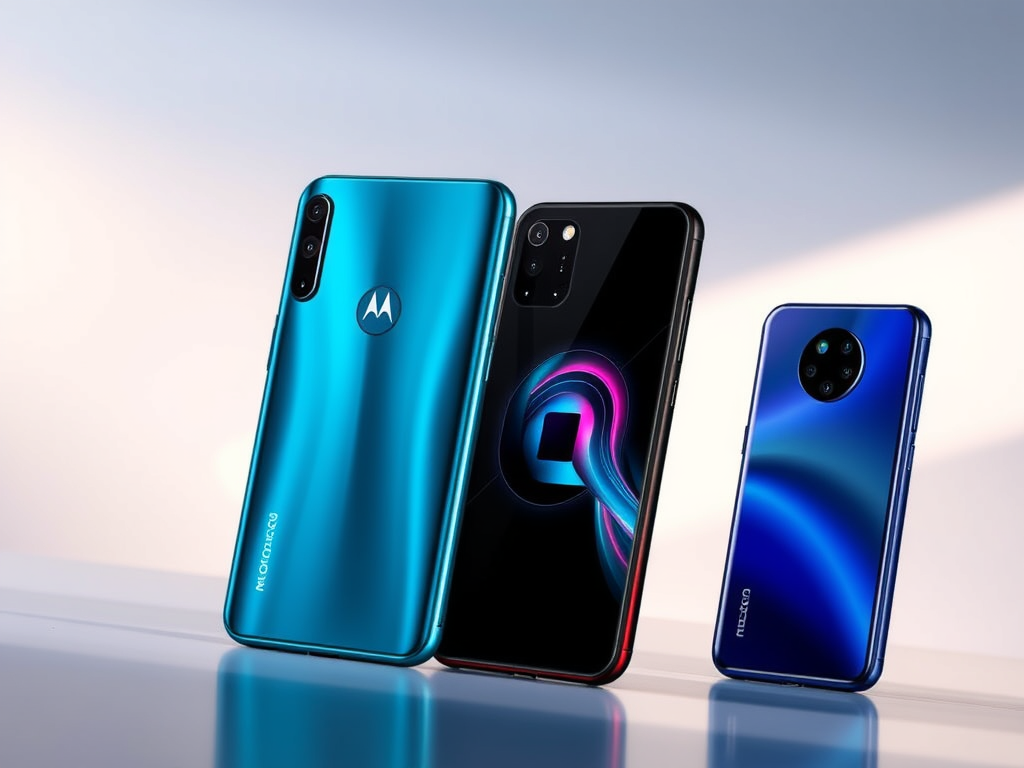
Looking for the absolute best smartphone under ₹30,000 in 2026? The mid-range market has completely transformed, and choosing the right device is no longer about finding the best overall phone—it’s about finding the perfect phone for yourspecific needs. Whether you need the flagship-level gaming power of the POCO X7 Pro, the bloatware-free experience of the Motorola Edge 70 Fusion, or the multi-day battery life of the Realme P4 Power, we’ve broken down the real-world pros and cons. Cut through the marketing hype and discover which sub-₹30K smartphone is actually worth your hard-earned money.
Here is a deep dive into the best smartphones under ₹30,000, highlighting the most genuinely useful tools and calling out the marketing hype that falls short.
1. Motorola Edge 70 Fusion: The Clean Software & Display Champion
Motorola has aggressively reclaimed the mid-range market by offering premium aesthetics and incredibly clean software.The Edge 70 Fusion is their latest strike in the sub-30k segment.
The Most Useful Features
- Hello UI (Near-Stock Android): In a segment plagued by bloatware and intrusive ads, Motorola’s near-stock Android experience remains its biggest asset. It is smooth, ad-free, and highly responsive, making it genuinely useful for professionals or anyone who hates cluttered interfaces.
- 144Hz Extreme AMOLED Display: While most competitors max out at 120Hz, the Edge 70 Fusion pushes a 144Hz refresh rate on a 6.8-inch display. The fluidity during scrolling and UI navigation is instantly noticeable and effectively mimics flagship-level responsiveness.
- Massive Battery with 68W Charging: Packing a massive 7,000mAh battery alongside 68W TurboPower charging means you get genuine two-day battery life without sacrificing fast top-ups.
The Less Useful / Overrated Features
- Secondary Camera Sensors: While the 50MP main sensor is highly capable, the secondary 13MP ultra-wide lens softens noticeably at the edges. It looks good on a spec sheet but lacks the dynamic range required for serious mobile photography.
- Curved Display Durability: The aggressive curve of the display makes the phone feel incredibly thin and premium, but it inherently increases vulnerability to drops and makes finding a reliable tempered glass screen protector a frustrating chore.
2. POCO X7 Pro & iQOO Neo 10R: The Raw Performance Beasts
For mobile gamers and power users, the conversation under ₹30,000 starts and ends with POCO and iQOO.
The Most Useful Features
- Flagship-Grade Silicon: The POCO X7 Pro utilizes the MediaTek Dimensity 8400 Ultra, while the iQOO Neo 10R relies on the Snapdragon 8s Gen 3. Both chips offer immense thermal headroom and sheer processing power, rendering 60fps+ gaming in heavy titles effortless.
- Ultra-Fast Charging: The POCO X7 Pro boasts 90W fast charging, while the iQOO Neo 10R pushes 80W. Being able to top up your battery from 0 to 50% in roughly 15 minutes fundamentally changes how you interact with your device—battery anxiety is essentially eliminated.
The Less Useful / Overrated Features
- Bloatware and UI Clutter: Both POCO’s hyperOS and iQOO’s Funtouch OS come pre-loaded with unnecessary third-party applications and aggressive notification pushes. You will spend the first hour of owning these devices uninstalling apps and disabling system ads.
- “AI Camera” Claims: Both brands heavily market their AI camera processing. In reality, the algorithms tend to aggressively over-saturate colors and over-sharpen faces to the point of looking unnatural. The raw camera hardware is good, but the software processing tries entirely too hard.
3. Nothing Phone (3a) Pro: The Aesthetic All-Rounder
Nothing continues to build its cult following by prioritizing design and user experience over raw benchmark numbers.
The Most Useful Features
- Nothing OS: The monochromatic, dot-matrix design language of Nothing OS is brilliant. It actively discourages mindless scrolling by making app icons uniform and less stimulating, which is a surprisingly useful tool for digital wellbeing.
- Versatile Camera Processing: Unlike the over-saturated processing of its gaming rivals, the Nothing Phone (3a) Pro’s 50MP main and 50MP ultra-wide sensors deliver highly color-accurate, contrast-heavy photos that require zero editing before posting to social media.
The Less Useful / Overrated Features
- The Glyph Interface: The signature LED lights on the back of the phone are visually striking but practically limited. Beyond acting as a fill light for close-up video or a glorified notification timer, the novelty wears off rapidly for the average user.
- Raw Gaming Performance: The Snapdragon 7s Gen 3 is a highly efficient chip for daily tasks, but it throttles under heavy, sustained gaming loads. It is an all-rounder, not a workhorse.
4. Realme P4 Power & Redmi Note 15 Pro: Hardware Extremes
Realme and Xiaomi’s Redmi sub-brand have taken the approach of offering highly specialized hardware extremes to capture specific niches.
The Most Useful Features
- Realme P4 Power’s Battery: Realme has engineered a staggering 10,000mAh battery into the P4 Power. If you frequently travel off the grid or simply despise charging your phone, this device offers unparalleled, multi-day endurance.
- Redmi Note 15 Pro’s 200MP Sensor: The Redmi Note 15 Pro features a massive 200MP main camera. While megapixel count isn’t everything, the sensor’s ability to “pixel bin” allows for exceptional detail retention in well-lit environments, enabling you to crop heavily into a photo without losing fidelity.
The Less Useful / Overrated Features
- Redmi’s Macro/Depth Sensors: The Redmi Note 15 Pro still includes low-resolution “filler” lenses purely to claim a triple-camera setup. These lenses offer virtually no practical utility compared to the massive main sensor.
- Realme P4 Power’s Weight and Ergonomics: A battery that large cannot defy physics. The P4 Power is noticeably heavy and thick, making one-handed use fatiguing and pocketability a genuine issue for users who prefer sleek devices.
Sub-₹30,000 Lineup Comparison
| Smartphone | Processor | Standout Feature | Biggest Drawback | Ideal User |
| Motorola Edge 70 Fusion | Snapdragon 7s Gen 4 | 144Hz AMOLED & Clean UI | Edge-distortion on cameras | UI Purists / Content Consumers |
| POCO X7 Pro | Dimensity 8400 Ultra | Unmatched Gaming Power | Bloatware-heavy OS | Hardcore Mobile Gamers |
| Nothing Phone (3a) Pro | Snapdragon 7s Gen 3 | Unique Design & OS | Mediocre heavy-load thermal | Trendsetters / Casual Users |
| Realme P4 Power | Dimensity 7400 Ultra | Massive 10,000mAh Battery | Heavy & Bulky | Travelers / Heavy Media Users |
Final Verdict
The sub-₹30,000 market in 2026 demands that you choose your priorities. If you value a clean software experience and a brilliant display, the Motorola Edge 70 Fusion is the undisputed king. If raw gaming framerates are your priority, the POCO X7 Pro offers flagship power on a budget. And if you simply want a device that looks entirely different from the rest of the pack while taking reliable photos, the Nothing Phone (3a) Pro is your best bet.
Avoid making a purchase based purely on the spec sheet; instead, align the manufacturer’s specific compromises with your daily usage habits.